
Trekking e-bikes price comparison
5 E-bikes from established makers · Selection index 95.1 +0.2% 7 d · avg €1,179 · as of 18/10/2026
Price table · 5 E-bikes
 ZUE·Z807Zündapp Z807 E-Bike 28" Herren Trekking Bike Pedelec 7 Gang€699±0.0%
 FIS·VIATORFischer E-Bike Trekking VIATOR 6.8i Ultimate Elektrofahrrad€1,699±0.0%
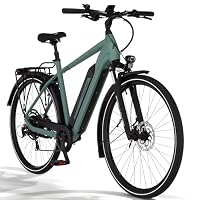 FIS·VIATORFischer E-Bike Trekking VIATOR 2.1 Active€1,044+1.7%
 FIS·ATBFischer E-ATB Terra 2.2 Active€1,104±0.0%
 FIS·VIATORFischer E-Bike Trekking VIATOR 4.2i Active Elektrofahrrad€1,349±0.0%
- ZUE·Z807Zündapp Z807 E-Bike 28" Herren Trekking Bike Pedelec 7 Gang beige/grünTrekking · 28 ″€699±0.0%±0.0%±0.0%24 d
- FIS·VIATORFischer E-Bike Trekking VIATOR 6.8i Ultimate Elektrofahrrad für Damen250 W · 170 km€1,699±0.0%±0.0%±0.0%7 d
- FIS·VIATORFischer E-Bike Trekking VIATOR 2.1 Active250 W · 120 km€1,044+1.0%+1.7%+2.5%
- FIS·ATBFischer E-ATB Terra 2.2 Active, Elektrofahrrad für Damen und Herren250 W · 160 km€1,104±0.0%––
- FIS·VIATORFischer E-Bike Trekking VIATOR 4.2i Active Elektrofahrrad für Damen250 W · 150 km€1,349±0.0%±0.0%−3.6%18 d
The trekking e-bike is the all-rounder among pedelecs: equipped for everyday use and still ready for long tours. Compare models and prices here.
What makes a trekking e-bike
A trekking bike combines the equipment of a city bike with the robustness of a touring bike: rack, mudguards, permanently fitted lights meeting German road regulations (StVZO), usually a suspension fork and 28-inch wheels. As an e-bike it adds a motor that assists you up to 25 km/h – ideal if you commute 10 to 30 kilometres a day or ride riverside cycle paths at the weekend.
Closely related are so-called ATB models (All Terrain Bike): they have slightly chunkier tyres and a sportier geometry, but are also fully equipped for everyday use.
What matters when buying
For commuters and tourers, three things are decisive: range, reliability and comfort. Range depends mainly on battery capacity – 400 to 500 Wh is enough for most commutes, while 600 Wh or more is pleasant for day tours.
- Motor position: a rear motor is cheap and low-maintenance, a mid-drive feels more natural and is stronger on hills
- Gears: derailleurs with 7–10 gears are standard, hub gears are cleaner and need less maintenance
- Frame size: choose to match your inside leg – many models come in several sizes
- Check the rack's load capacity and the permitted total weight if you ride with panniers
- Lights should be powered directly from the battery
Rear motor, front motor or mid-drive?
Budget trekking e-bikes usually use a hub motor in the rear wheel. It gives a noticeable push, but works independently of the gears and is usually controlled by a cadence sensor that only detects that you are pedalling – not how hard. Mid-drive motors with a torque sensor meter the assistance more finely and therefore feel more like “your own power”. Front motors have become rare because the front wheel can spin more easily on wet surfaces.
For flat commutes a rear motor is perfectly adequate. If you face lots of climbs or carry luggage, a mid-drive motor with at least 50 Nm is worth it.
Who a trekking e-bike is the right choice for
A trekking e-bike suits you if you want one bike for almost everything: the commute, the weekly shop with panniers and the 60-kilometre Sunday ride. It is less ideal if you almost only ride short distances in town – a city e-bike is more comfortable then – or if you regularly ride narrow trails, for which an e-MTB is better suited. Also budget for good accessories: a solid lock, waterproof panniers and regular servicing make a big difference to how long you enjoy the bike.