
Long-range e-bikes
3 E-bikes from established makers · Selection index 97.3 +0.9% 7 d · avg €1,159 · as of 18/10/2026
Price table · 3 E-bikes
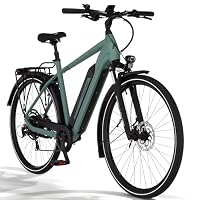 FIS·VIATORFischer E-Bike Trekking VIATOR 2.1 Active250 W · 120 km€1,044+1.0%+1.7%+2.5%
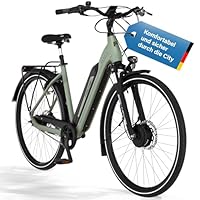 FIS·CITAFischer E-Bike City CITA 2403 Active Elektrofahrrad für Damen und120 km · City€1,085±0.0%+1.0%−5.3%
 FIS·VIATORFischer E-Bike Trekking VIATOR 4.2i Active Elektrofahrrad für Damen250 W · 150 km€1,349±0.0%±0.0%−3.6%18 d
On long commutes and day tours, every watt-hour counts. Here you'll find e-bikes for which the manufacturer claims a range of 100 km or more – and learn how much of that is realistic.
How range claims are calculated
Manufacturer claims such as “up to 120 km” almost always apply to ideal conditions: lowest assistance level, flat route, light rider, warm temperatures, hardly any stopping and starting. In everyday use, often only half to two thirds of that is realistic. Battery capacity in watt-hours is more meaningful: depending on riding style, a pedelec needs around 7 to 15 Wh per kilometre, more off-road or with luggage.
Example: a 48 V, 15 Ah battery has around 720 Wh. At 10 Wh per kilometre that gives about 70 km – more when cruising on the flat, considerably less in hilly country in turbo mode.
What affects range
The biggest factors are you and your route:
- Assistance level: turbo can more than double consumption compared with eco
- Climbing and headwinds
- Total weight of rider, bike and luggage
- Tyre pressure and tyre width
- Temperature: usable capacity drops noticeably in the cold
- Frequent stopping and starting in city traffic
Large battery or a second battery?
A large battery is more convenient, but makes the bike heavier and more expensive. If you only occasionally ride long tours, a medium-sized battery plus a charger in your bag or a second battery can be more flexible. Some models offer a dual-battery option with two batteries in the frame. With replacement batteries, only use original batteries or models approved by the manufacturer – cheap copies are a fire and safety risk.
Tip: range claims from different manufacturers are not comparable. Compare watt-hours, motor efficiency and – where available – independent measurements instead.
Who a large battery is worth it for
A large battery is worthwhile for commuters who can't charge at work, for touring riders and for anyone living in hilly country. If you only ride short distances, you'd just be carrying unnecessary weight around.
Testing range in everyday use
In the first few weeks, deliberately ride your usual route in different assistance levels and note how much battery percentage you use. You'll soon know exactly how much reserve you have – more reliable than any remaining-range display.