
Guide
Pedelec, S-pedelec, e-bike: what's legal?
Not every bike with a motor is legally a bicycle. If you know the difference between a pedelec, an S-pedelec and an e-bike with a throttle, you avoid fines, insurance problems and expensive bad buys.
Updated 8 min readEditorial team woebike.de
The three categories at a glance
In everyday language, every bike with a motor is called an “e-bike”. Legally, however, a clear distinction is made – and that decides whether you can simply ride off or need a plate and a licence.
- Pedelec (pedal electric cycle): the motor only assists while pedalling, up to 25 km/h, max. 250 W continuous rated power – legally a bicycle
- S-pedelec: pedal assistance up to 45 km/h, usually up to 500 W – legally a moped (Kleinkraftrad)
- E-bike in the narrower sense: goes faster than 6 km/h via a throttle even without pedalling – legally a motor vehicle (e.g. a Mofa or moped)
Pedelec: the rules for most e-bikes
A pedelec is treated the same as a bicycle. You need neither a driving licence nor an insurance plate, there is no compulsory helmet and no legal minimum age. You ride on cycle paths where their use is mandatory, and you may also use areas open to bicycles.
A start-up or push assist that accelerates the bike to up to 6 km/h without pedalling is permitted. A throttle that works beyond that turns the pedelec into a motor vehicle.
The traffic rules for cyclists apply to pedelecs, including the alcohol limits: in Germany, cycling with 1.6 per mille (0.16%) or more is a criminal offence, and from as little as 0.3 per mille if you show signs of impairment.
S-pedelec: faster, but with obligations
S-pedelecs assist up to 45 km/h. The rules for mopeds therefore apply: the bike needs type approval, an insurance plate, a rear-view mirror and further equipment. You need at least an AM class licence (included in a class B car licence) and must wear a suitable protective helmet.
Cycle paths are generally off-limits for S-pedelecs – both in and outside built-up areas – unless an additional sign explicitly allows them; some German federal states use a sign such as “S-Pedelecs frei” for this. So as a rule you ride on the road. The alcohol limits for motor vehicles also apply, i.e. 0.5 per mille, or 0.0 per mille for novice drivers and under-21s.
Beware of marketplace offers with 1000 W and 45 km/h
Online marketplaces offer many “e-bikes” promising 750 to 3000 watts, dual motors or speeds of 45 to over 60 km/h. As a rule, these bikes have no type approval for German roads. They are neither pedelecs nor approved S-pedelecs and may only be ridden on private land.
Anyone who uses them on public roads anyway risks serious consequences: riding without insurance cover (a criminal offence), riding without a licence (a criminal offence), the vehicle being taken off the road and, in an accident, personal liability for damages that can quickly become ruinous. Notes such as “for private land only” or “keine ABE” (no general operating permit) are often only in the small print.
Tuning: why “derestricting” is a bad idea
Tuning chips or software that remove the 25 km/h cut-off are easy to get. Legally, this turns the pedelec into an unregistered motor vehicle. The consequences are the same as above: no insurance cover, criminal offences, loss of warranty. Many manufacturers can now detect tampering via the motor software. Liability insurers can also claim recourse after an accident.
Insurance and theft protection
No insurance is required for pedelecs. Damage you cause to others is usually covered by your personal liability insurance – check whether pedelecs are explicitly included. Against theft, home contents insurance with a bicycle clause or special e-bike insurance helps; the latter often also covers battery damage and vandalism.
For S-pedelecs, motor liability insurance is compulsory; it is proven by the insurance plate, which changes every year.
Pedelecs up to 25 km/h with a 250 W motor
Ad All products linked with "View offer" are commission (affiliate) links: if you buy through them, we earn a commission – the price stays the same for you. As an Amazon Associate and eBay Partner Network affiliate we earn from qualifying purchases. Learn more
 Ad
Ad Ad
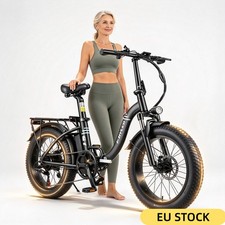
Ad20 Zoll Elektro Fahrrad E-Bike Klapprad 250W 20AH Damen/Herren Citybike …
 Ad
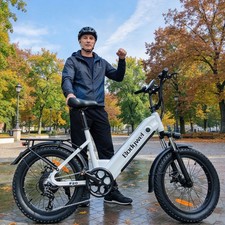
Ad20 Zoll Klapprad Elektrofahrrad E-Bike EBYCCO S1 250W Shimano Pedelec …
 Ad
AdChildren, trailers and child seats
Like bicycles, pedelecs may carry a child seat or pull a child trailer, provided the bike and accessories are approved for it. Pay attention to the permitted total weight and the manufacturer's trailer approval. For children themselves there is no legal minimum age for pedelecs; manufacturers usually only approve their bikes from a certain age or height, though.
Checklist: is my e-bike a legal pedelec?
Before buying – especially cheap imports – these questions help:
- Does the spec sheet state 250 W continuous rated power (not just “peak”)?
- Does the assistance stop at 25 km/h?
- Does a throttle only work as a start-up aid up to 6 km/h?
- Is there a declaration of conformity to EN 15194?
- Are StVZO-compliant lights fitted?
City and trekking pedelecs
Ad All products linked with "View offer" are commission (affiliate) links: if you buy through them, we earn a commission – the price stays the same for you. As an Amazon Associate and eBay Partner Network affiliate we earn from qualifying purchases. Learn more
 Ad
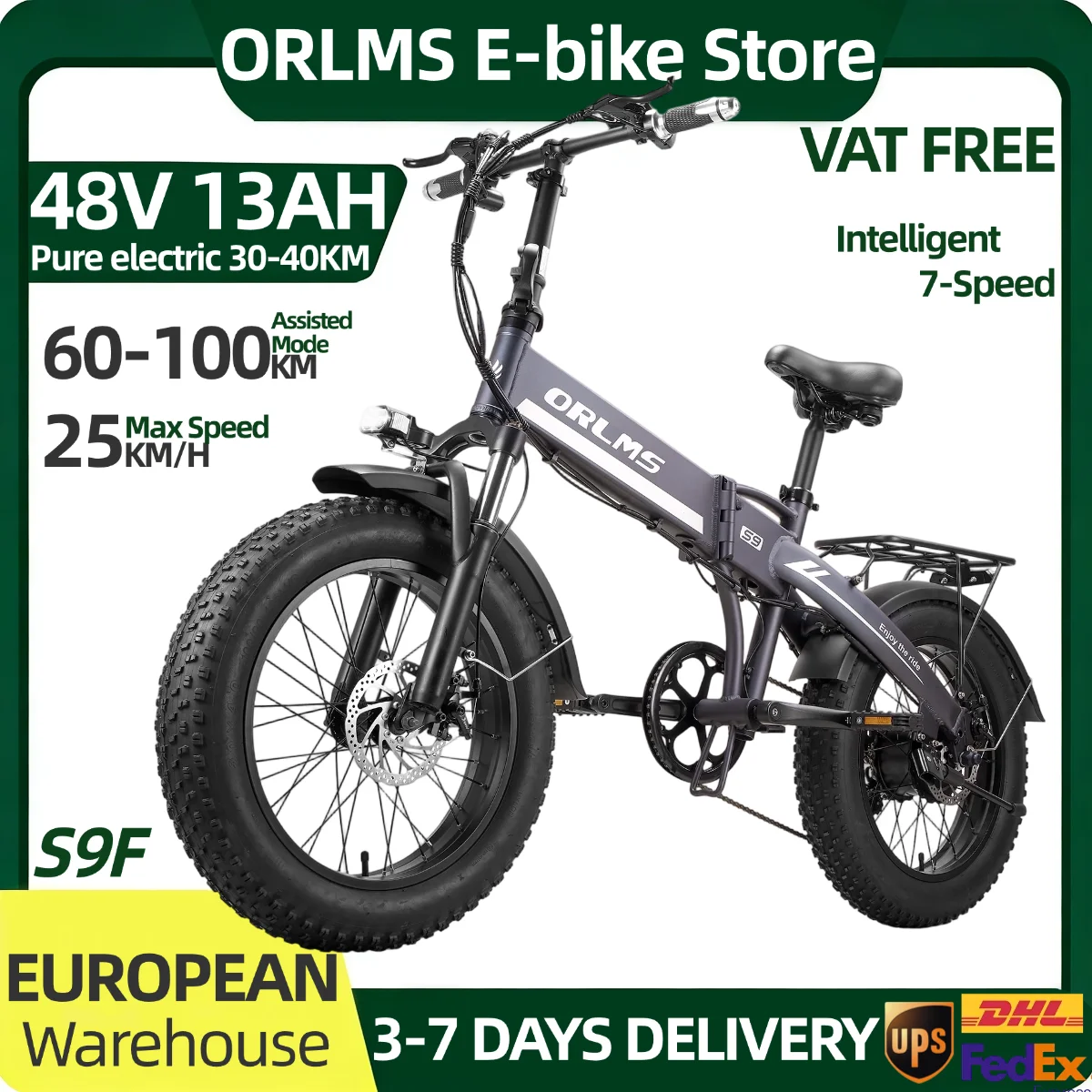
AdOrlms S9F 48V 13Ah Elektrofahrrad für Erwachsene, 20*4 Zoll Reifen …
 Ad
Ad Ad
Ad Ad
AdLights and equipment under StVZO
Like bicycles, pedelecs must be roadworthy under the German road vehicle regulations (StVZO). That means two independent brakes, a bell, a white headlight and a red rear light, a white front reflector, a red rear reflector (in addition to the rear light), yellow pedal reflectors and reflectors or reflective strips on the spokes or tyres. The lighting must carry an approval mark, recognisable by the letter K and a number on the lamp.
Many cheap imported bikes lack these parts, or they are not approved. You can usually retrofit them without any problem. When buying accessory lights, look for the approval mark – otherwise you could get a warning fine at a check.
What applies to rental and leased bikes
The rules apply regardless of whether you own the bike, rent it or lease it through your employer. With company bike leasing (Dienstrad-Leasing), contracts usually allow both pedelecs and S-pedelecs. For tax purposes, however, partly different rules apply to S-pedelecs because they count as motor vehicles – clarify this with your employer or leasing provider before signing.
With rental bikes on holiday, for example elsewhere in Europe, it's worth a quick look at the local rules. The pedelec definition of 25 km/h and 250 W is uniform across the EU, but helmet requirements, minimum ages and cycle path rules differ from country to country.
Carrying bikes on a car rack
For transport on a rear carrier, the towbar's nose weight and the carrier's load capacity are what count. Two 25 kg e-bikes plus a carrier quickly put more than 70 kg on the towbar. Remove the batteries before driving and carry them inside the car – that saves weight on the carrier and protects the batteries from rain and theft.
How to recognise an S-pedelec
At first glance, S-pedelecs are often barely distinguishable from normal pedelecs. Clear features are the insurance plate at the rear, a rear-view mirror, a horn rather than just a bell and often a high beam. The spec sheet states type approval of class L1e-B, and assistance goes up to 45 km/h. If these details are missing even though a seller talks about 45 km/h, it is usually an unapproved vehicle. If in doubt, ask for the certificate of conformity (COC) – without it you won't get an insurance plate.
Good to know: pedelecs abroad
Within the EU, the pedelec definition is uniform. Some countries, however, require high-visibility vests outside built-up areas or helmets for children, for example – check the rules in your destination country before a cycling trip.
In a nutshell
If your e-bike only assists while you pedal, cuts out at 25 km/h and has a motor with no more than 250 W continuous rated power, it is a pedelec and legally a bicycle. Anything faster or more powerful, or that moves via a throttle without pedalling, is a motor vehicle with obligations regarding registration, insurance and licence. If in doubt, check the declaration of conformity or ask the manufacturer – before you buy, not after a traffic check.
This overview does not replace legal advice. The current German Road Traffic Regulations (StVO), the Vehicle Registration Ordinance (FZV) and the Road Vehicle Licensing Regulations (StVZO) are authoritative; for specific questions, motoring and cycling clubs, insurers or a traffic law solicitor can help.
FAQ
Do I need a helmet for a pedelec?
No, there is no helmet requirement for pedelecs up to 25 km/h. Wearing a helmet is still recommended. For S-pedelecs, a suitable protective helmet is compulsory.
Can I ride an S-pedelec on cycle paths?
Generally not – neither in nor outside built-up areas. It is only allowed if an additional sign explicitly opens the cycle path to S-pedelecs.
Is an e-bike with a throttle legal?
Only as a start-up or push assist up to 6 km/h without pedalling. If the throttle accelerates beyond that, the bike is a motor vehicle and needs registration, insurance and a licence.
Does the same alcohol limit apply to pedelecs as to cars?
No, the limits for cyclists apply to pedelecs (absolute unfitness to ride from 1.6 per mille). For S-pedelecs, by contrast, the same limits as for cars apply (0.5 per mille, 0.0 for novice drivers).
What happens if I'm caught on a 1000 W e-bike?
You face criminal proceedings for riding without insurance cover and without a licence, as well as the vehicle being seized. In an accident, you may be personally liable for all damages.